SDG 17

PARTNERSHIPS FOR THE GOALS

ICTP Evaluation Published by UNESCO

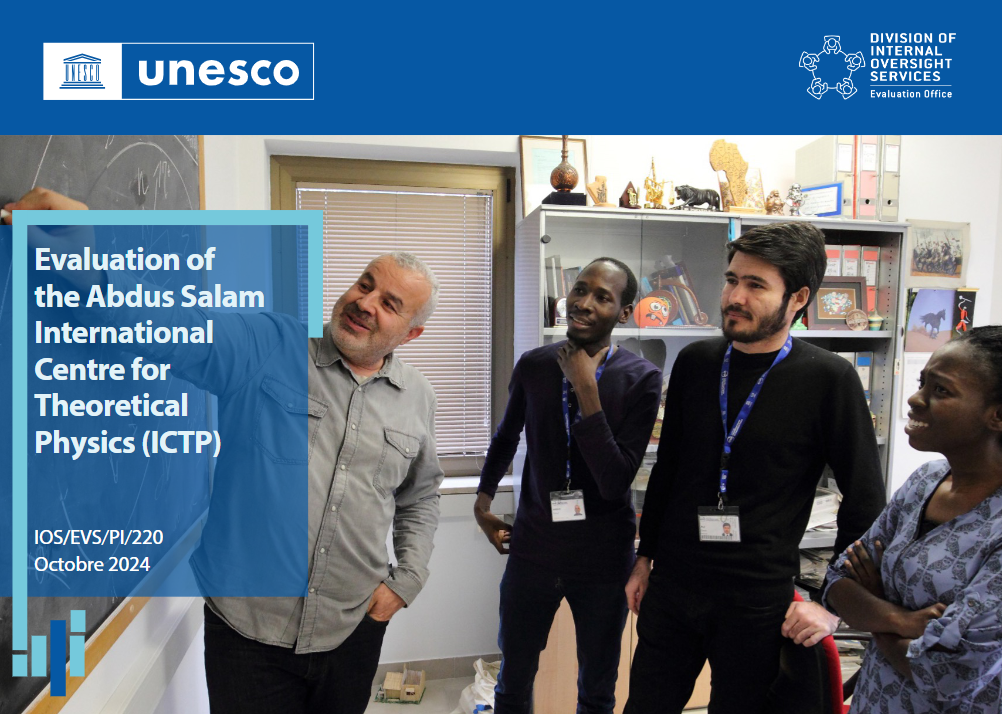
In october of 2024, UNESCO published The evaluation of the Abdus Salam International Centre for Theoretical Physics (ICTP) which was conducted by ECOPER.

The report reveals taht ICTP’s mission and foundational principles of excellence, inclusion, and international cooperation remain highly relevant to the needs of developing countries, addressing the persistent North-South capacity gap and new technological challenges and opportunities. The evaluation found ICTP’s model and construct to have proven successful overtime. Key findings of the report include a comprehensive measurement and mapping of ICTP outreach and impact across developing countries.

Read more

West Africa: regional trade and integration in global value chains

West Africa faces significant trade challenges, including aging infrastructure, inefficient customs processes, and high logistics costs that hinder regional and international trade. The high transport delays and costs, as well as non-tariff barriers, limit their competitiveness in global markets. Against this backdrop, UNCTAD has conducted a technical cooperation project and assigned to ECOPER its final …

Read more

Evaluating ICTP, the UNESCO category 1 center on natural sciences

ECOPER was commissioned by the UNESCO Internal Oversight Services to conduct the evaluation of the International Center for Theoretical Physics (ICTP). Under the umbrella of the UNESCO Natural Sciences Sector, ICTP is a UNESCO Category 1 Center governed by a tripartite agreement between the government of Italy, the International Atomic Energy Agency (IAEA), and UNESCO. …

Read more

Defining, estimating and disseminating statistics on illicit financial flows in Africa

UNCTAD published ECOPER’s evaluation report on UN Development Account project 1819Y on Defining, estimating and disseminating statistics on illicit financial flows in Africa. The project “Defining, Estimating, and Disseminating Statistics on Illicit Financial Flows (IFFs) in Africa” was designed to enhance the statistical capacity of African governments to measure and report on IFFs. This initiative …

Read more

ECOPER conducts evaluation research at UN Palace of Nations

ECOPER consultant Aitor Pérez has travelled to the UN Palace of Nations in Geneva as part of the evaluation of UNCTAD’s Subprogramme 1. During the week-long visit, Aitor interviewed several UNCTAD officials, including the Secretary General, Rebeca Grynspan, and the directors of a number of UNCTAD divisions. In addition, he had the opportunity to interview …

Read more

UNCTAD subprogramme on globalization, interdependence and development

ECOPER has begun the independent evaluation of UNCTAD’s Subprogramme 1. This subprogramme aims to advance inclusive and sustainable development, sustained growth, full employment and decent work for all through evidence-based policies and strategies at national, regional and international levels. The evaluation aims to help UNCTAD identify key lessons on strategic positioning, portfolio planning, management arrangements …

Read more

Internet metrics and the evaluation of projects

In project evaluation, it is common to use techniques such as document reviews, semi-structured interviews, focus groups, and surveys. However, increasingly, development projects can leave their mark on the internet, leading to internet metrics becoming a new evaluation technique. ECOPER regularly evaluates United Nations projects that aim to implement improvements in public policies in developing …

Read more

Building capacity in humanitarian emergency management

Humanitarian emergencies frequently require a rapid response from the organisations responsible for providing assistance. In response to this, Caritas has implemented a capacity building programme on emergency preparedness and response, Phase II (ReCIP2) in Mali, which had the aim of improving the organisations’ response to emergencies. ECOPER recently completed its external evaluation of the intervention. The evaluation aimed to both analyse the results of the programme and, where possible, propose improvements which could be adopted for future efforts. It was conducted remotely owing to the COIVD- 19 pandemic, with interviews and surveys taking place online.

Read more

Transparency in trade regulation in the Pacific islands

Regulatory transparency is considered a central tenet of international trade and vital to the success of the recently signed Pacific Agreement on Closer Economic Relations (PACER) Plus. ECOPER recently presented its final evaluation report for the UNCTAD project ‘Transparency in Trade Regulation and Facilitation in the Pacific Agreement on Closer Economic Relations (PACER) Plus’, a …

Read more

Agriculture TVET in Jordan

ECOPER has reported on its tracer study of former agriculture TVET students in Jordan. The study aimed to collect information from the students on areas such as their education, current occupation and school-to-work transition. The conditions created by the COVID-19 pandemic meant that the researchers used an online approach to data collection. A survey was distributed by text message and focus groups were conducted via videoconference to gather further insights. These methods proved to be both efficient and well-suited to the conditions.

Read more