SDG 8

DECENT WORK AND ECONOMIC GROWTH

UNCTAD subprogramme on globalization, interdependence and development

ECOPER has begun the independent evaluation of UNCTAD’s Subprogramme 1. This subprogramme aims to advance inclusive and sustainable development, sustained growth, full employment and decent work for all through evidence-based policies and strategies at national, regional and international levels. The evaluation aims to help UNCTAD identify key lessons on strategic positioning, portfolio planning, management arrangements …

Read more

Synthesis review of the ILO’s work towards SDG 8

SDG 8 on sustained, inclusive and sustainable economic growth and full and productive employment for all is core to the International Labour Organisation’s mandate. To inform ongoing efforts to contribute to SDG 8, ECOPER was commissioned to conduct a synthesis review of nearly one hundred ILO projects evaluated between 2019 and 2020.  The review first …

Read more

Trade and gender capacity building

ECOPER has presented its final report on a cluster evaluation of UNCTAD support to ‘Capacity building on Trade and Gender Online Training’. The evaluation, which was conducted in collaboration with an expert on gender and human rights, assessed a series of interventions carried out between 2015 and 2020 which focused on the development and delivery …

Read more

Transparency in trade regulation in the Pacific islands

Regulatory transparency is considered a central tenet of international trade and vital to the success of the recently signed Pacific Agreement on Closer Economic Relations (PACER) Plus. ECOPER recently presented its final evaluation report for the UNCTAD project ‘Transparency in Trade Regulation and Facilitation in the Pacific Agreement on Closer Economic Relations (PACER) Plus’, a …

Read more

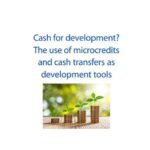
Micro credits and cash transfers as development tools

A research project in partnership with the Trans European Policy Studies Association (TEPSA)

This month the report ‘Cash for Development: The use of microcredits and cash transfers as development tools’ was published by the European Parliament Committee on Development. It was co-authored by ECOPER consultants, following a meta-evaluation of previous studies on cash-for-development tools.The report aimed to provide an overview of cash transfers and microcredits as poverty reduction instruments in order to inform EU development policy ahead of the EU’s reshaping of development finance tools in the 2021-27 period. The study considered the current level of EU support for cash transfers and microcredits, and the efficiency and design of the support provided.

Read more

Better Education for Africa’s Rise II

The adequate provision of technical and vocational education and training (TVET) is considered a key element in improving the prospects of young people in the areas of decent work and entrepreneurship. ECOPER consultants have collaborated with Ockham IPS in the evaluation of the joint UNESCO-Republic of Korea project ‘Better Education for Africa’s Rise (BEAR) II’, …

Read more

Investing in the Sustainable Development Goals

ECOPER has completed the evaluation of the UNCTAD project ‘Investment promotion partnerships for the development, marketing and facilitation of bankable Sustainable Development Goal projects’. The project aimed to enhance the capacities of investment promotion agencies (IPAs) in the preparation, promotion and facilitation of bankable SDG projects. ECOPER’s evaluation approach involved data collection through diverse information sources and methods: a documentary analysis, semi-structured interviews with project stakeholders and an extensive, multi-lingual online survey of IPAs.

Read more

Entrepreneurship policymaking

Better designed and implemented entrepreneurship policies should result in more new businesses created, with potential long-term benefits for economic growth, employment and economic integration. Following this logic, UNCTAD has implemented the project ‘Support Developing Country Policy Makers in the Formulation of National Entrepreneurship Policies through the Implementation of Entrepreneurship Policy Frameworks’. The intervention has been with an evaluation conducted by ECOPER, which featured an extensive document review, along with interviews and an online survey. ECOPER also attended an Africa Entrepreneurship Forum in Kigali, Rwanda in order to directly observe project activity.

Read more

Support for TVET in the Southern African Development Community

Technical and Vocational Education and Training (TVET) can empower individuals and contribute to economic growth. UNESCO’s Better Education for Africa’s Rise (BEAR) project aimed to support TVET in five African countries and this month the project’s evaluation report was published following a collaboration between ECOPER and Ockham IPS. The evaluation involved ECOPER carrying out field missions in two countries: The Democratic Republic of Congo and Namibia.

Read more

Public-private development partnerships in the Dominican Republic

Public Private Development Partnerships (PPDPs) are recognised as one of the primary means of implementing the international development agenda as framed by the Sustainable Developing Goals. On this topic, CODESPA recently presented the report ‘Institutional, Legal and Socioeconomic Context as a Reference for the Establishment and Promotion of Public Private Development Partnerships in the Dominican Republic’, in which ECOPER collaborated. The study was funded Spanish Agency for International Development Cooperation (AECID) and was commissioned ahead of an AECID project which will aim to strengthen the capacities of the Dominican Vice Ministry of International Cooperation in the creation of PPDPs.

Read more